

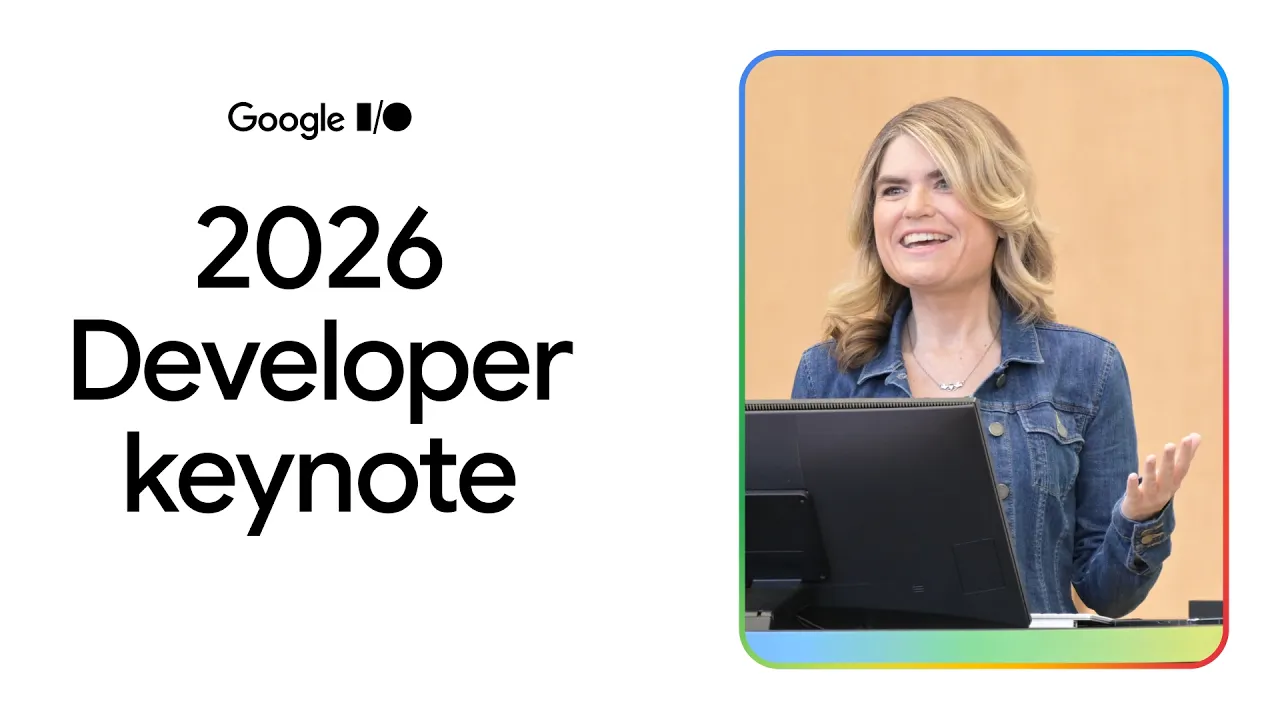
Google I/O: Antigravity 2.0 Launch
Google was preparing its biggest Antigravity launch yet, a full product ecosystem debuting at Google I/O.
Tiger Souvannakoumane
Product Marketing Manager, Google DeepMind
Google was preparing its biggest Antigravity launch yet, a full product ecosystem debuting at Google I/O.
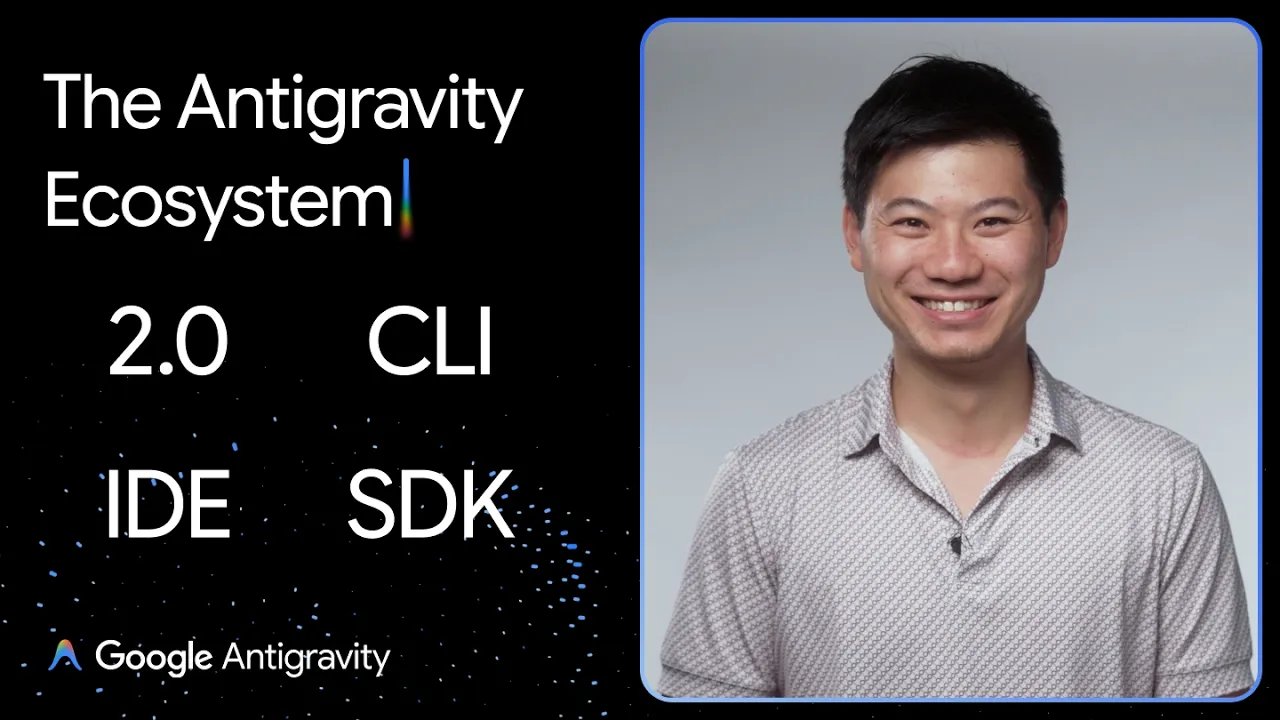
Antigravity was expanding well beyond its original product. At Google I/O in May 2026, Google set out to introduce three new products at once: Antigravity 2.0, an agent manager decoupled from the IDE, the new Antigravity CLI, and the Antigravity SDK. Antigravity 2.0 was built to be unabashedly agent-first: the team believed these models would keep getting better, so the product was designed to scale with that intelligence rather than stay tied to an IDE built around what models could do today. As models improve, there are things people simply won’t need to do by hand anymore, and Antigravity 2.0 was built for that future, a tool made for agentic engineering. That meant the announcement couldn’t live in one place. It had to land in the main keynote, then again in the developer keynote with more technical depth, then again on the show floor through specialty demos, and again across a full suite of product education videos. It wasn’t just explaining three new products. It was making sure the audience understood Antigravity 2.0, the CLI, the SDK, and the existing IDE as one connected ecosystem: the same agentic experience available across every surface, so people could pick whichever one fit their workflow and still get the best of Gemini no matter which Antigravity product they chose.
Challenge
Three new products, one keynote moment, a technical audience that wanted proof, not hype.
Antigravity 2.0 needed a strong high-level story: not just what it was, but why being built agent-first and decoupled from the IDE was a deliberate bet on where the models were headed. The CLI needed its own real launch moment, a clear explanation of what it unlocked, plus a practical walkthrough so developers could see themselves using it day to day instead of just watching a demo. The SDK needed a story of its own too, clear enough that developers understood how to build and customize their own agent experiences with it. Underneath all three was a harder problem: the products were genuinely new, and the story had to be accurate enough to survive scrutiny from legal, brand, and PR while still being interesting enough to hold a keynote audience’s attention. If the keynote, the demo floor, and the video suite each told a slightly different version of that story, people would walk away confused about what was actually new.
Solution
I worked at every altitude, keynote script, physical demos, product education, and fast follow-up, to launch three new products as one coherent story.
I was script lead for Antigravity’s part of the Google I/O developer keynote. I worked directly with engineers to understand where 2.0, the CLI, and the SDK were headed and how to explain them accurately, then partnered with product, marketing, legal, branding, and PR to make sure the story was correct and approved before it reached the stage. I also helped shape the keynote’s live demos with engineering, so the script and the on-stage product behavior reinforced each other instead of just sounding good on paper.
One live demo captured exactly what made this launch different. We showed how to fine-tune Gemma 4 live on stage. Normally, if you ask an LLM for a bash command, it buries the actual command inside a long explanation before it gets to the point. We fine-tuned Gemma 4 to just give you the bash command directly. We kicked off that fine-tuning live inside Antigravity 2.0, then used the Antigravity CLI to connect directly into that same session. The CLI’s own agent checked in on the fine-tuning’s progress and ran a few slash commands against it, right there in the session we’d started in 2.0. That was the whole point: you get the same agentic experience no matter which Antigravity surface you choose to work in. Then, for time, we switched to a model already fine-tuned through that same process to show the final result.
Beyond the keynote, I led two specialty demo build-outs at I/O. The Antigravity Arcade gave attendees several ways into the product depending on how deep they wanted to go: a station to just play existing games, a station to iterate on them, a station to build new features on top of a base game, and a deeper laptop station for people who wanted to spend real time building or substantially modifying their own game. Whatever people built could be pushed to a cloud server and played on an actual arcade cabinet with a joystick and buttons.
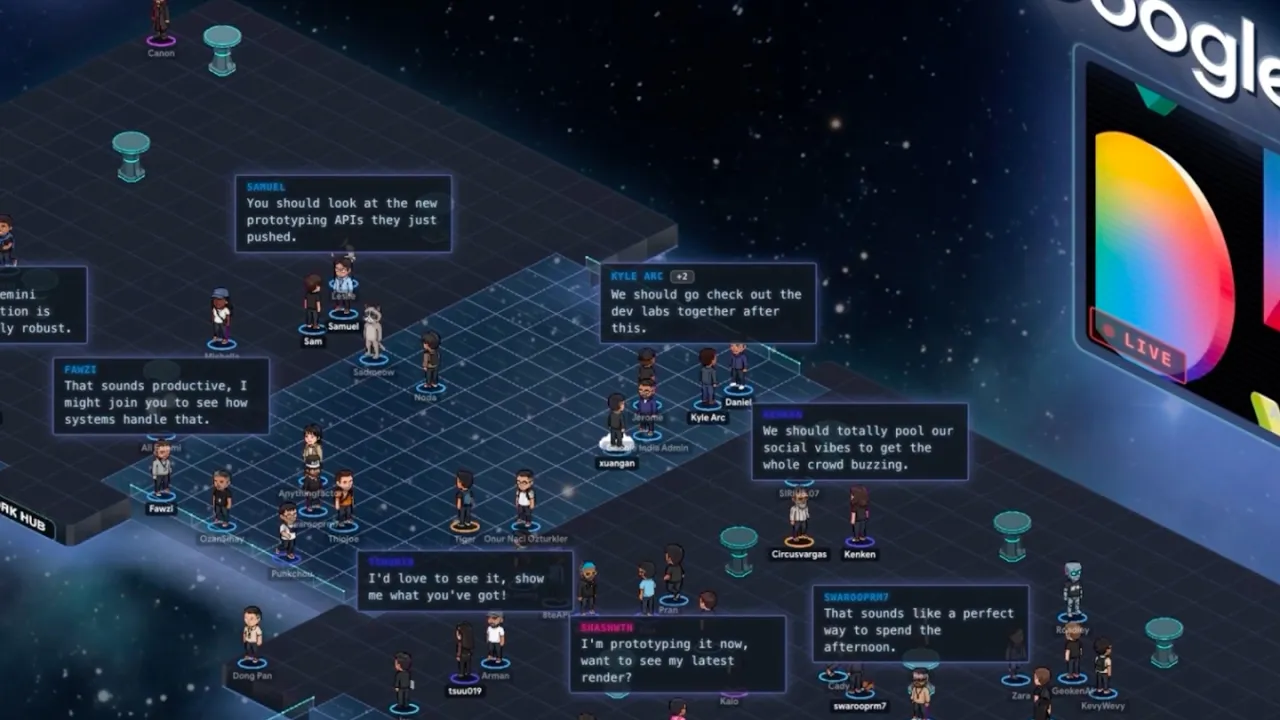
We called this one Antigravity Orbit: a space station demo that showcased the Antigravity SDK. It had its own onboarding experience already built in, powered by a custom agent built with the SDK itself. Attendees personalized their own character inside that experience, seeing the SDK’s capabilities in action rather than watching someone else’s demo.
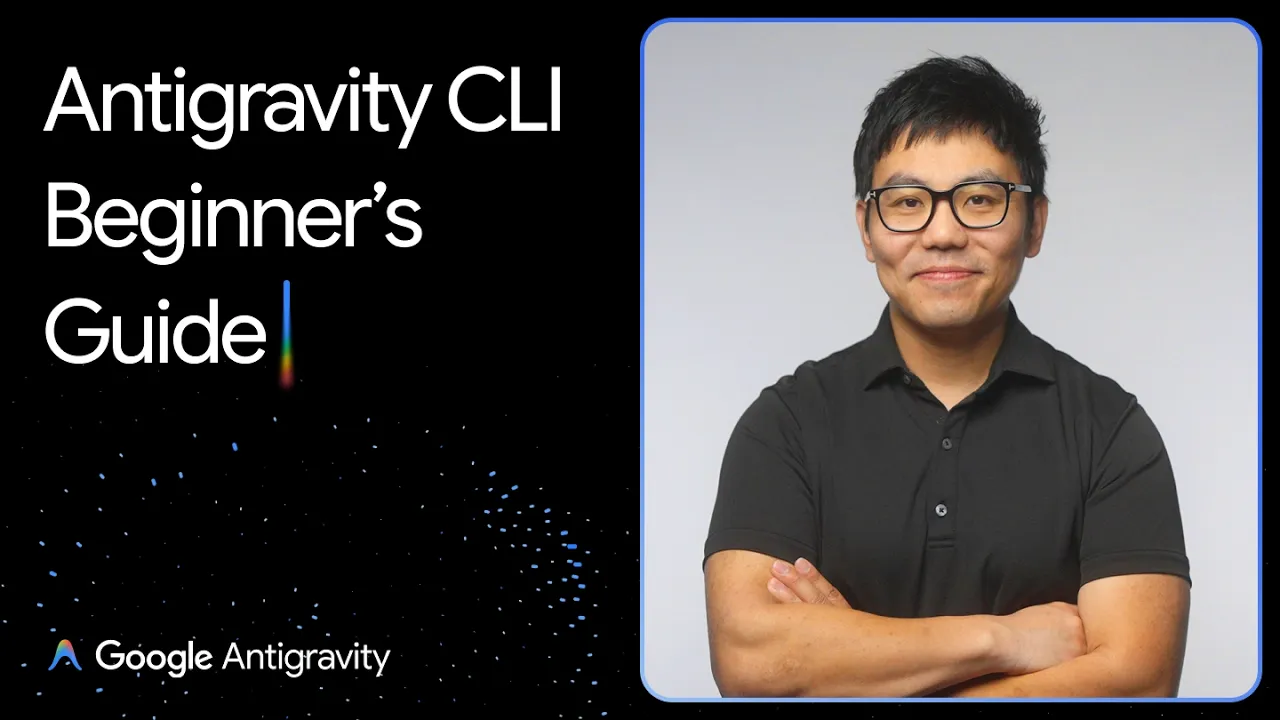
I led production on “What is Antigravity 2.0?” and the rest of the launch video suite, including a long-form first-look at building inside 2.0, a CLI launch video and dedicated CLI walkthrough, “Which Antigravity product should you use?”, and an SDK launch video. That meant shooting, scripting, and managing editors through delivery, not just directing from a distance. For a technical audience, I kept the approach direct on purpose. They didn’t need a flashy sell, they wanted to see how the product actually worked, so the videos were built to show, not tell.
Launch wasn’t the finish line. Once the products were out, people had real questions about which Antigravity surface actually fit their use case. Looking back at the content engine we’d already built, that’s exactly what let us turn that question into “Which Antigravity product should you use?” fast, while attention was still high, instead of losing the moment to a slower production process.
Result
Three new products landed as one coherent Antigravity story.
The launch held together across every format it touched: keynote, physical demo, product video, and follow-up content. People came away understanding Antigravity as one connected ecosystem, 2.0, the CLI, the SDK, and the IDE together, instead of four separate names to sort out on their own. The Arcade and Antigravity Orbit gave people something to build and hold onto beyond the keynote stage, and the fast follow-up video answering “which Antigravity product should you use” let the team keep shaping the narrative right when questions and attention were highest. The Gemma 4 demo made that concrete: the same agentic experience whether you were working in 2.0 or the CLI, not two separate products people had to take our word were connected. The bigger lesson: once a product gets this complex, good writing alone isn’t enough. It takes an overarching storyline that threads through every surface, so all the different pieces still add up to one story.
Next
Project.
Each project shows how I approach design, structure, and development.
